


.svg)

Introduction
Welcome to the command center for your team. Managing employee accounts is not just about adding names to a list—it is about establishing a secure, auditable framework for your business.
Whether you are a startup or an enterprise, your goal is to apply the Principle of Least Privilege: giving team members exactly the access they need to do their jobs, and nothing more.
The Golden Rule of Governance
Before you begin, understand the fundamental rule of the Everflow permission model:
Only Super Users can manage other users. If you do not have Super User status, you cannot add employees, change permissions, or force password resets. This ensures that the "Keys to the Kingdom" remain in authorized hands only.
The Permission Hierarchy
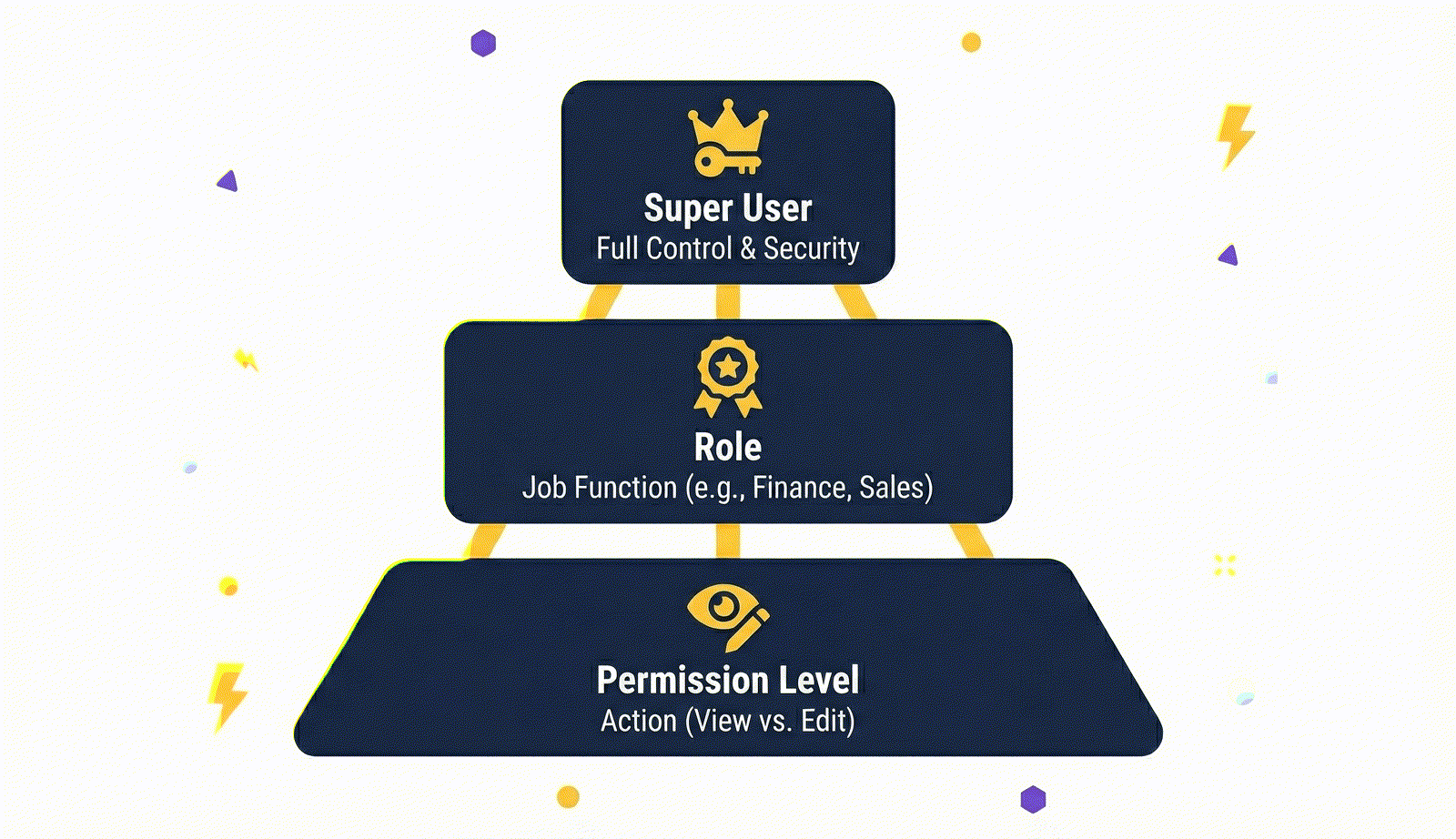
Understanding how access flows is critical. Everflow uses a three-tier structure to determine what a user can do.
1. Super User (The Architect)
- The highest level. Has full control over the platform, billing, and security settings.
- Can they manage others? Yes.
2. Role (The Job Function)
- Defines the "Department" (e.g., Affiliate Manager, Finance, Tech Ops).
- Example: An "Affiliate Manager" role can see Partners but cannot touch Invoices.
3. Permission Level (The Action)
- Defines the "Depth" of access within that role (Full Access vs. Read Only).
- Example: A "Read-Only" Finance user can view invoices but cannot pay them.
The Management Roadmap
We have organized this series to guide you from basic setup to advanced security governance.
For Enterprise & Scaling Teams
For networks managing large-scale teams or corporate environments, Everflow supports enterprise-grade governance tools:
- Single Sign-On (SSO): Centralize login and offboarding using your corporate identity provider (Google Workspace, Azure AD, Okta).
- Network API: Automate the bulk creation and management of users programmatically.


